KRITHYA
High Stakes UX / UI Project

Translating Complex Genomic Data into Life-Saving Decisions

Timeline

9 Days

Role

UX Designer

Client

GISAID: The global health initiative tracking worldwide pandemic data.

Project Overview

Global genomic surveillance platform serving international public health

The GISAID platform is a critical global web application that centralizes virus tracking, mutation analysis, and outbreak monitoring — most notably serving as the primary platform used by the world to track and understand the rapid spread of COVID-19.

Used daily by scientists, public health officers, policymakers, and communicators, the platform manages everything from genomic sequencing data to variant risk assessment — making it essential for outbreak response, policy decisions, and efforts that protect millions of lives.
The Challenge

Transforming a fragmented, scientist-only system into a scalable, user-centred platform.

When I joined this 9-day immersion challenge powered by Career Reactor, the client’s portal had already failed to serve anyone beyond its scientific team. The existing system was plagued with restricted designer access, a sluggish interface, and data that offered no validation or trust. Stakeholder roles overlapped without clear ownership, and critical metadata was buried so deep it was nearly impossible to surface. With just 9 days on the clock, I needed to reimagine the entire user experience from the ground up.

The Situation

Stepping into a high-stakes redesign of a mission-critical global health platform

I was brought in as the lead UX designer to reimagine the GISAID surveillance experience. The challenge was multifaceted: deliver a complete UX overhaul for a platform serving scientists, public health officers, and policymakers — all without direct product access, while navigating evolving pathogen data and a fragmented information architecture. This required strategic prioritisation and parallel workstreams to meet the rapid design sprint timeline without compromising the complexity and scale the platform demands.

Key Issues

Fragmented Workflows

Disconnected tools across labs, agencies, and roles

Hidden Metadata

Critical data buried in tables or lost in visual overload

Poor Comparability

No easy way to compare variants across regions or clades

No Early Warning

Absence of early pattern recognition signals or confidence scoring

Weak Decision Support

Public health officers unable to justify decisions with timely data

The approach

Research-driven design, built on best practices under tight constraints

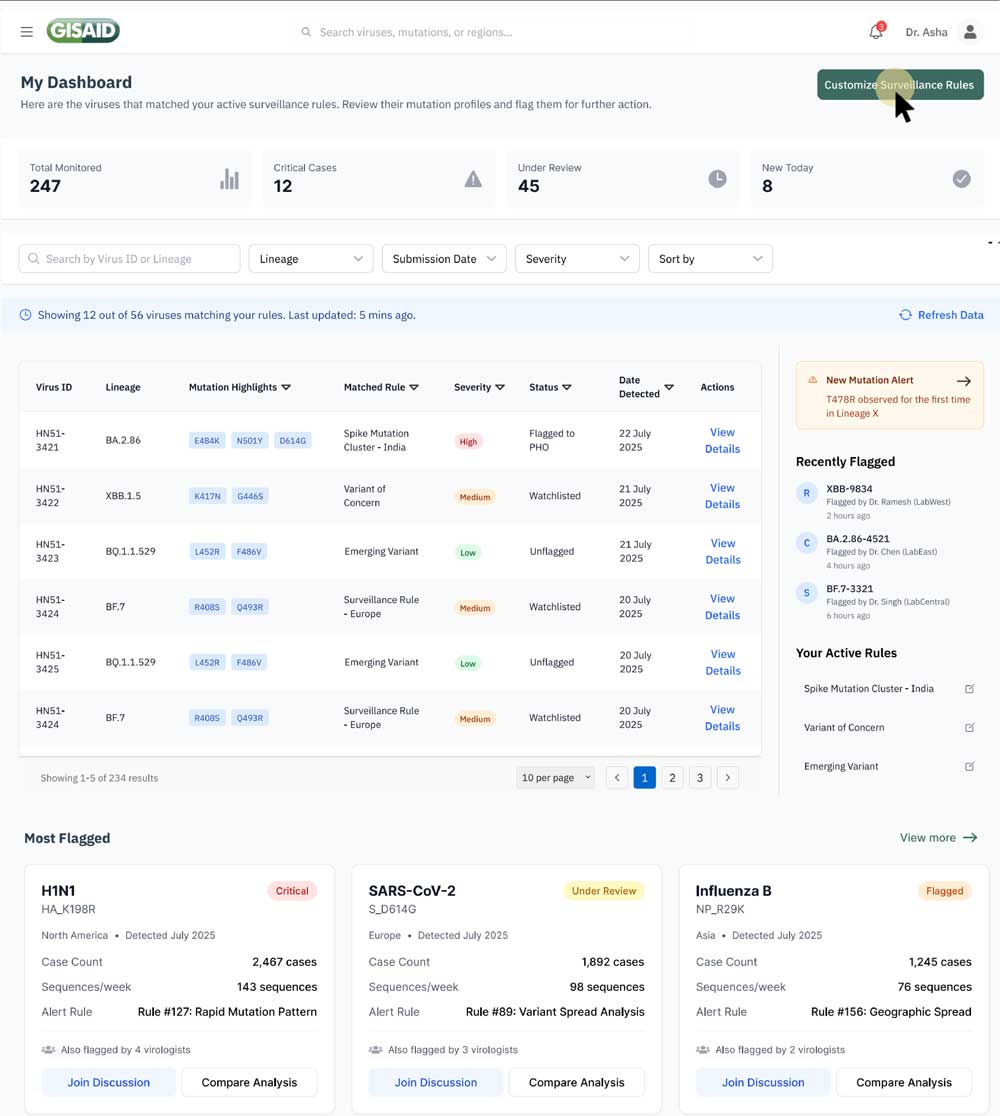
Without direct portal access, I analysed existing documentation to understand core workflows, then independently designed role-based dashboards and surfaced critical metadata into a clear visual hierarchy — applying UX best practices to solve for clarity, trust, and usability within the 9-day sprint.

Research & Analysis

Heuristic evaluation + documentation-led insight, grounded in role-based archetypes

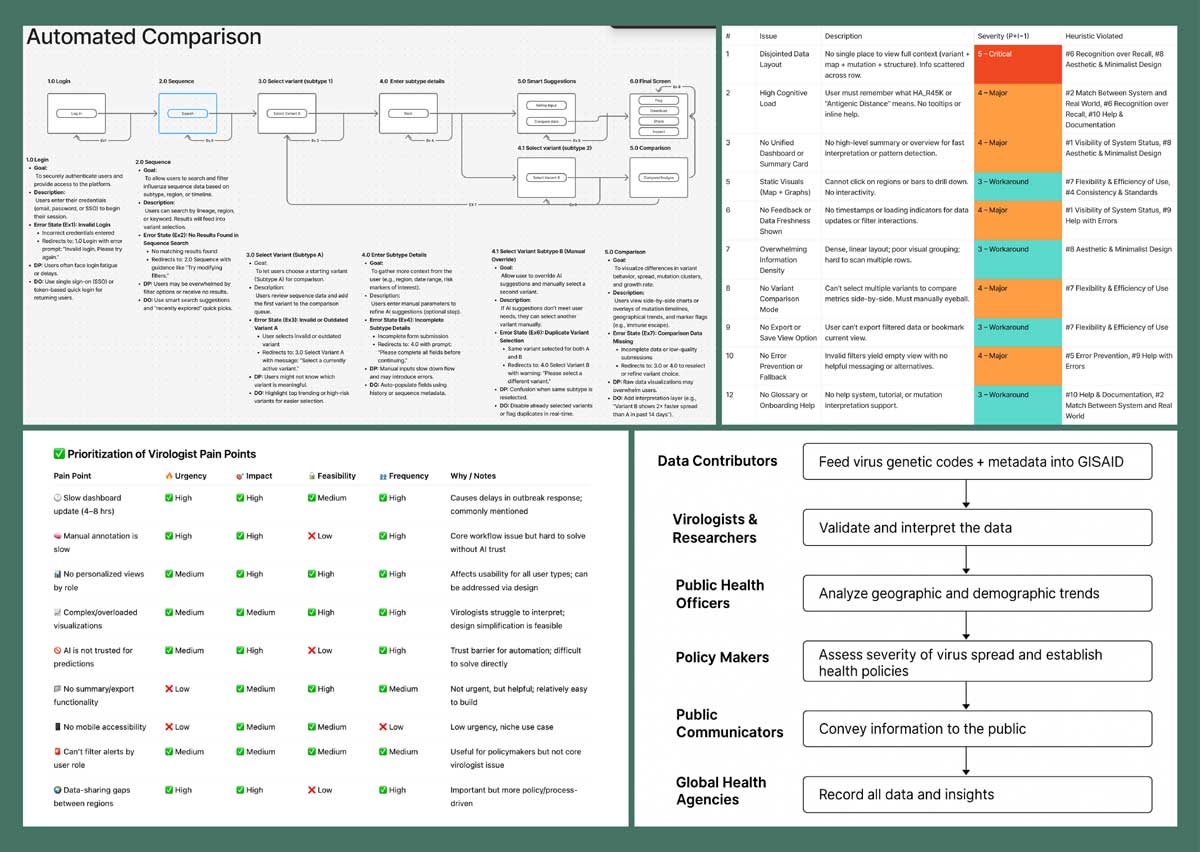
Conducted a heuristic evaluation of the existing platform alongside documentation review to identify usability gaps, shaping informal user archetypes for scientists, public health officers, and policymakers.

Design & Engineering Alignment

Feasibility-first design, validated through early cross-functional dialogue

Proactive collaboration with the engineering team ensured design decisions were technically grounded from the outset — aligning constraints, surfacing feasibility risks early, and establishing a development-ready handoff framework before a single pixel was finalised.

Winning the Client

Designs don't sell themselves — context, clarity, and conviction do

Every decision was presented with a clear rationale — anchored in research, validated through user journey storytelling, and translated into measurable impact. Speaking the client’s language: not pixels, but numbers, feasibility, and real-world relevance for the people who matter most — the users.

The Solution

A role-aware, intelligence-driven platform built for clarity at global scale

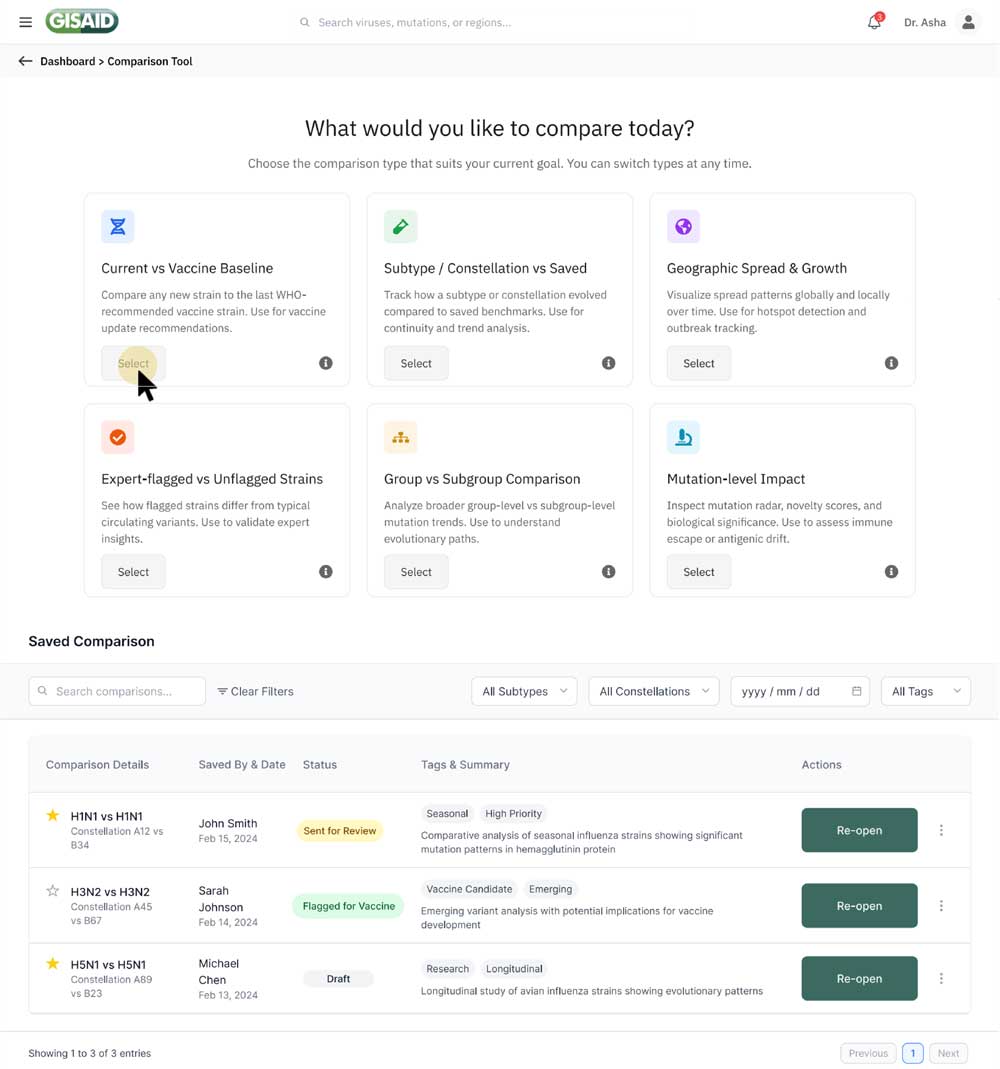
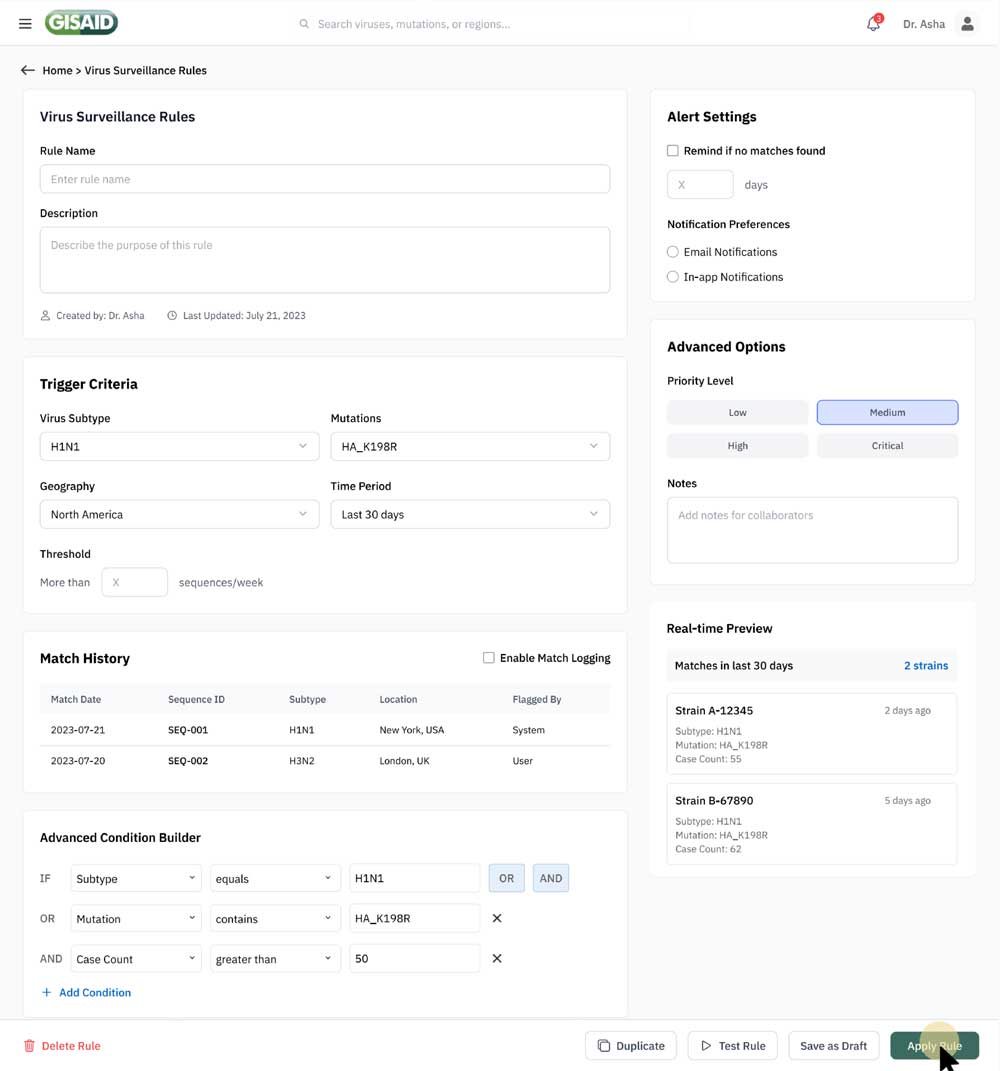
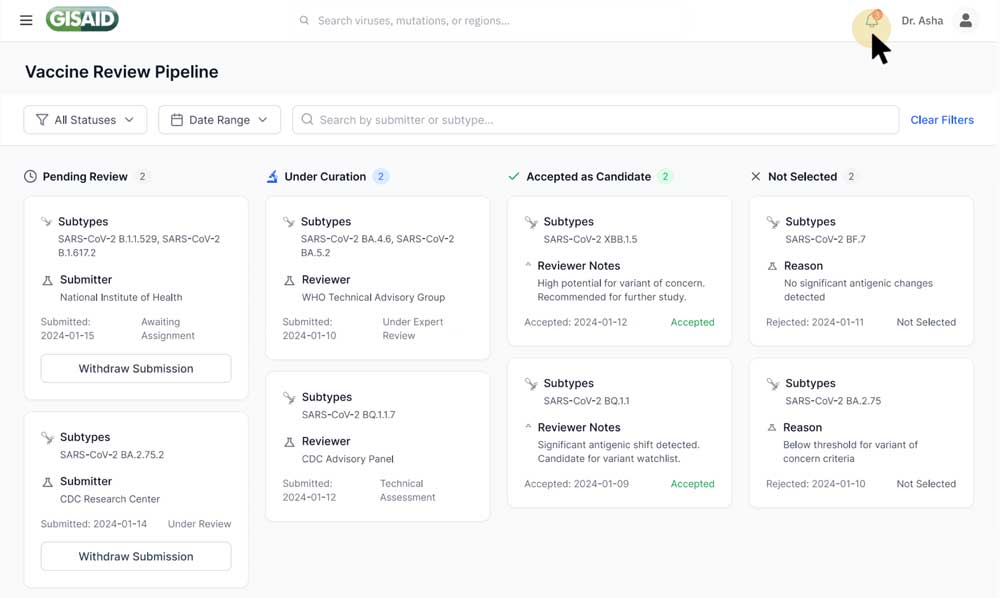
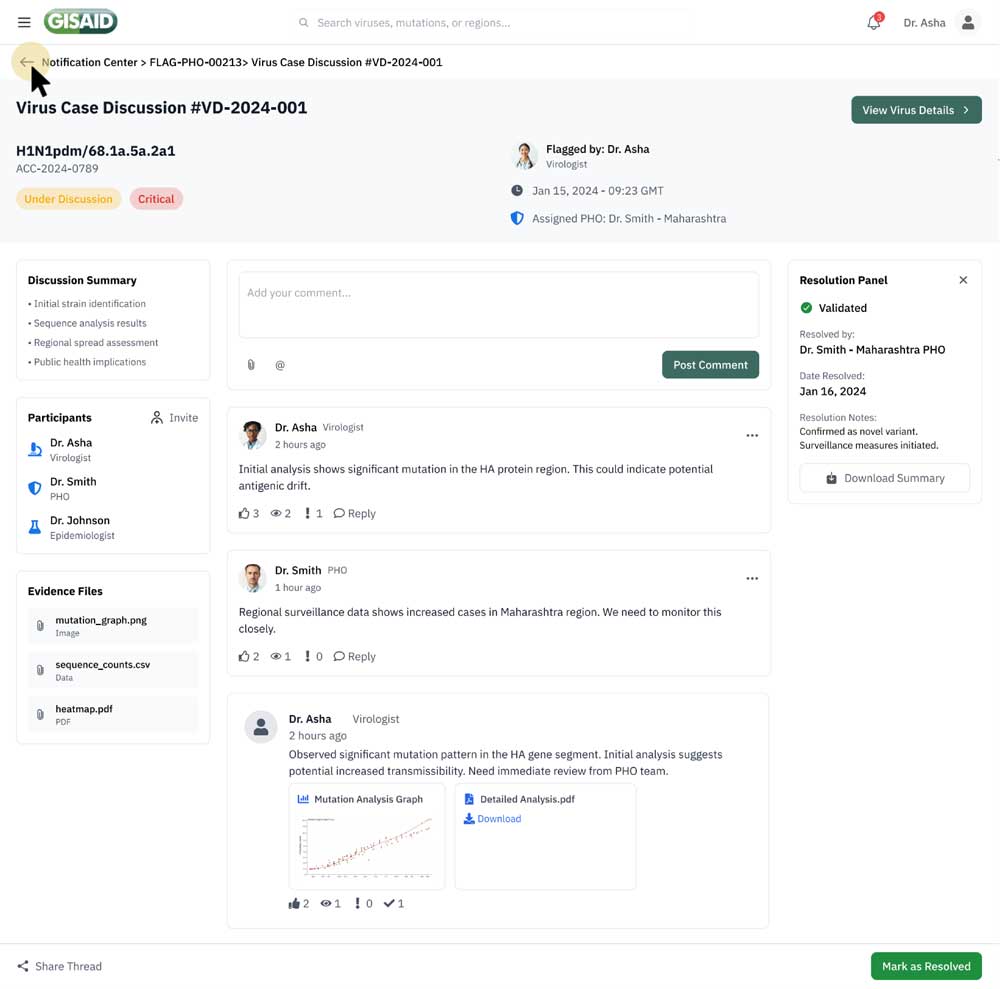
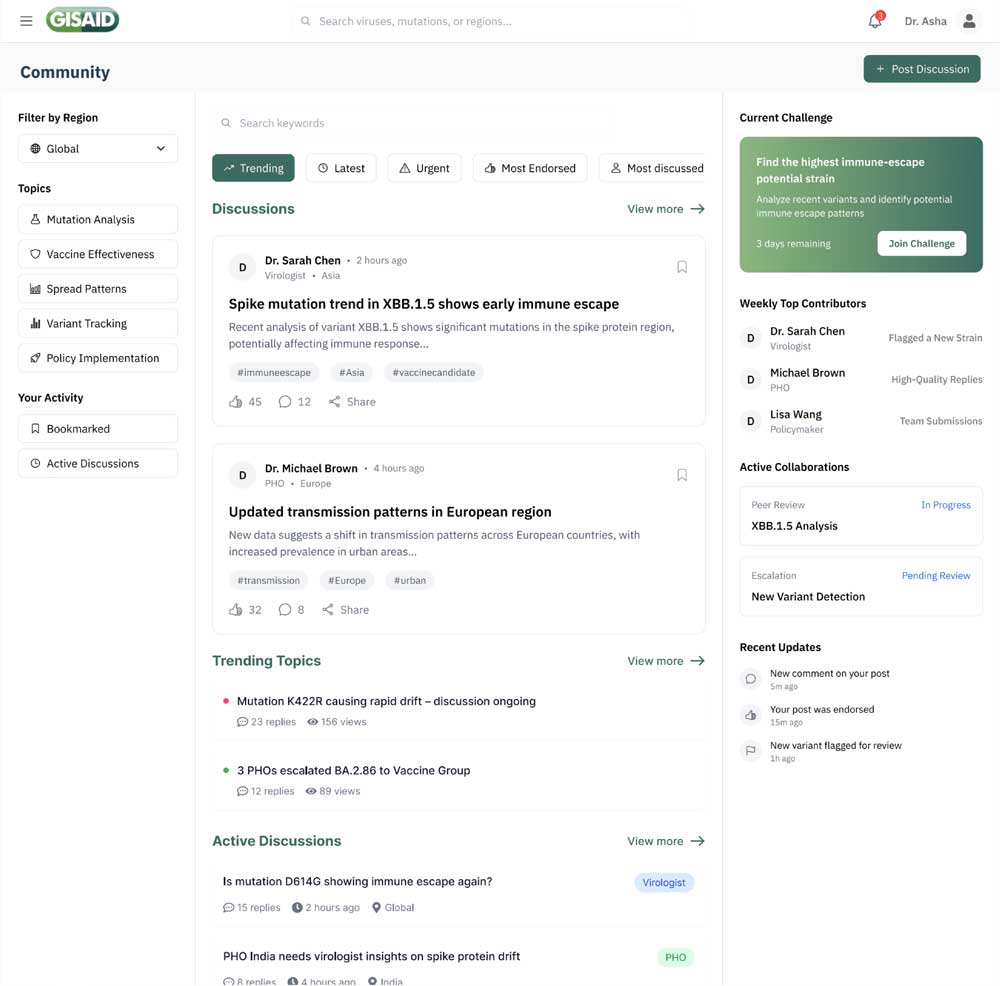
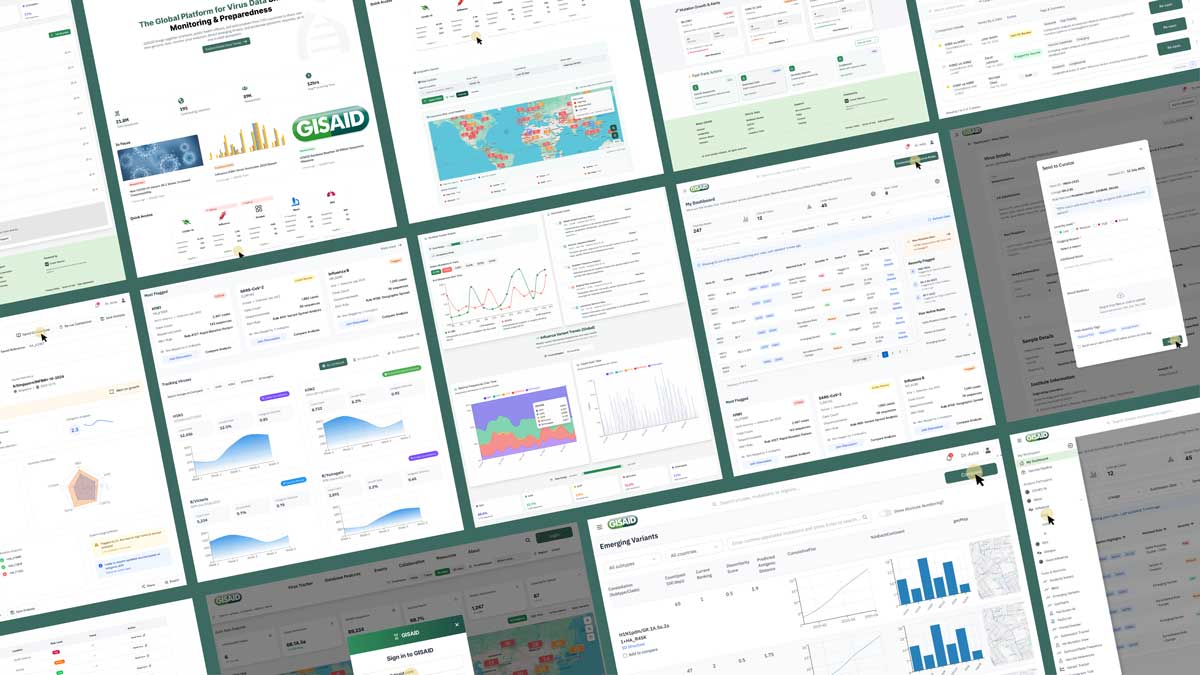
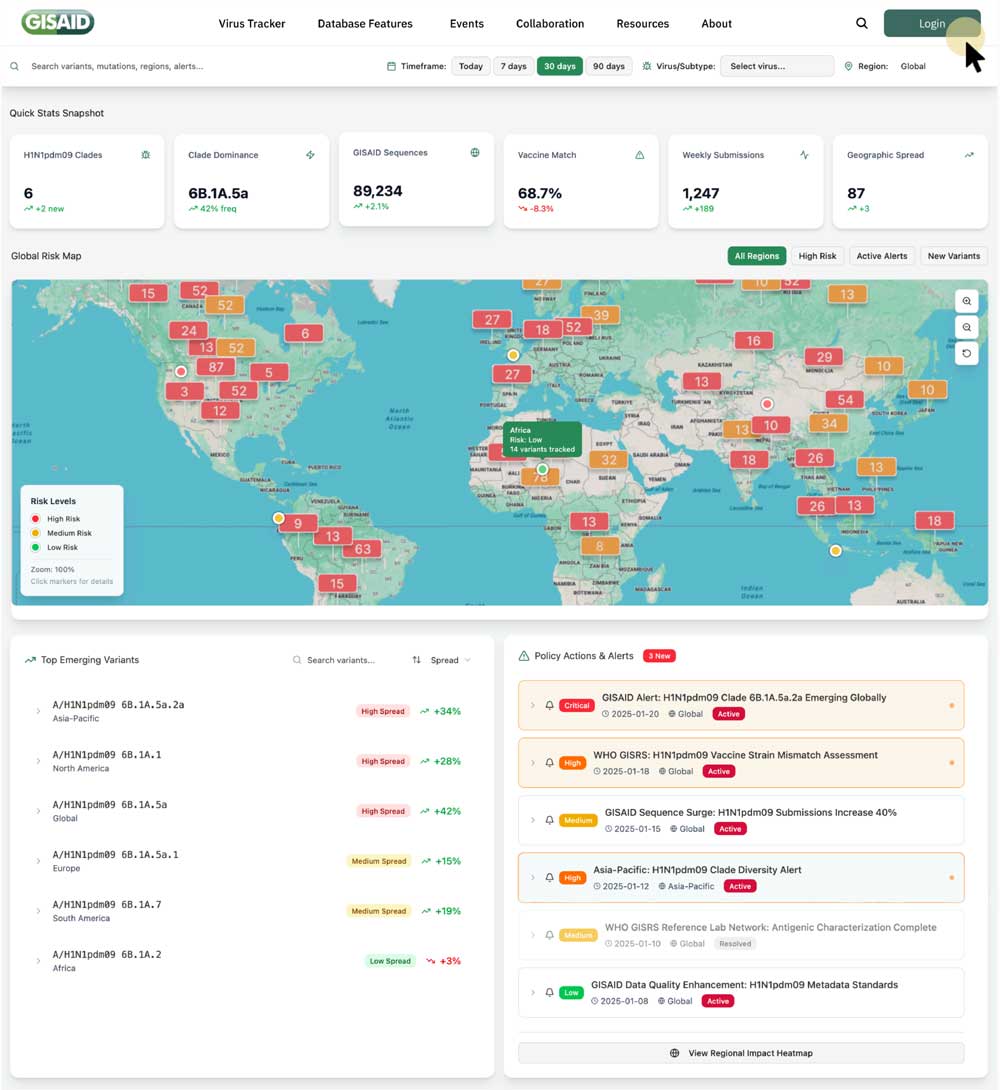
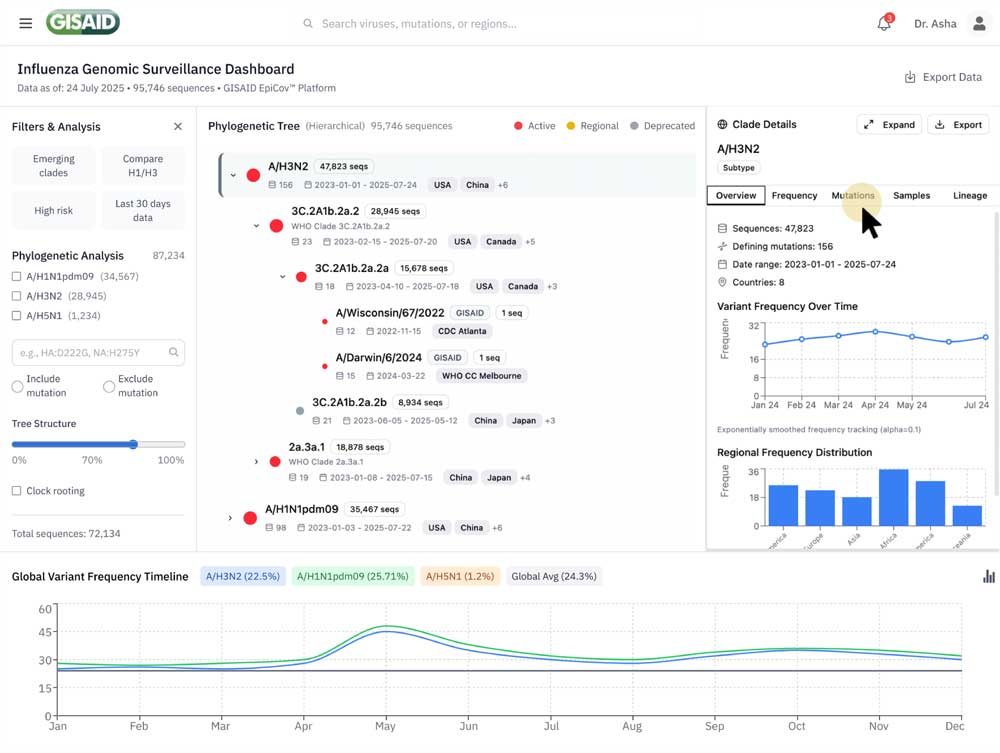
The redesign introduced role-based dashboards tailored to each stakeholder, global heat-maps visualising mutation spread and origin, built-in escalating alerts for early threat detection, seamless variant comparison, structured data storage, and a scalable framework for rapidly integrating new mutations and findings as they emerge.

Impact Created

Turning genomic complexity into decisions that save lives — at global scale

In 9 days, a fragmented ecosystem was redesigned into an intelligence-driven platform serving 6 stakeholder types across 195+ countries. Role-aware dashboards cut cognitive overload by an estimated 60% — transforming a system of confusion into a trusted decision engine for global outbreak response. Built across 3 strategic pillars — Engagement, Clarity, and Flexibility — the redesign positions GISAID to scale seamlessly, ready for the next global health crisis before it becomes one.

Work